
Tech
Best Practices for CrowdStrike MDR Adoption

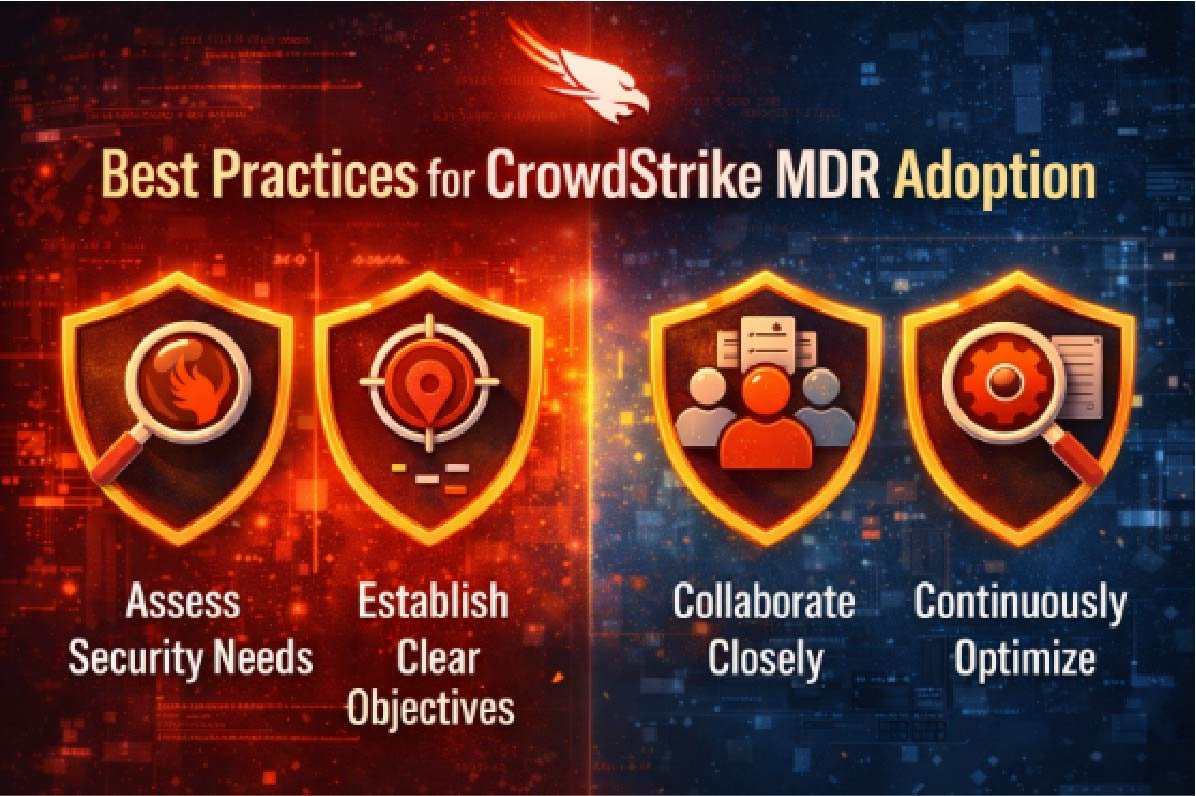
Security leaders do not struggle with the idea of managed detection and response. The difficulty sits elsewhere. It sits in the decision to trust an external team with live telemetry, containment authority, and incident judgement at two in the morning.
Adopting CrowdStrike MDR is not a tooling exercise. It reshapes operational accountability, internal workflows, and board expectations. The technology matters, but the friction usually appears in the gaps between people and process.
The following reflects practical observations from organisations that have implemented crowdstrike managed detection and response. Some transitions were smooth. Others were uncomfortable for longer than expected.
Understand What You Are Actually Handing Over
Before contracts are signed, clarity is needed on what responsibility moves outside the organisation.
MDR is not just alert triage. It involves monitoring, investigation, and in many cases active containment. That may include isolating hosts or disabling user accounts. For some boards, that authority shift is not fully understood until the first containment action interrupts operations.
Security teams often assume they retain full operational control. In practice, the provider works from agreed playbooks and escalation thresholds. If those are poorly defined, tension appears quickly.
This stage demands internal conversations. Not technical ones. Governance discussions. Who approves containment rules? Who signs off on automated isolation? What level of risk appetite is acceptable overnight when executives are unavailable?
When these questions are avoided, friction surfaces during incidents rather than before them.
Map Existing Detection Capabilities Honestly
Organisations tend to overestimate their detection maturity. That becomes visible when MDR onboarding starts.
Log sources may be incomplete. Identity telemetry might not be integrated. Endpoint coverage sometimes sits below 85 percent even when reports suggest full rollout.
A candid baseline assessment prevents awkward recalibration later. MDR should not compensate for missing hygiene. It should enhance an already functional security stack.
In many deployments, the most valuable early activity involves cleaning asset inventories and rationalising endpoint groups. That work is not glamorous. It rarely appears in vendor presentations. Yet it determines how effective the service becomes within the first quarter.
Align MDR With Business Risk, Not Just Threat Intelligence
Threat feeds are interesting. They are rarely the primary concern of the board.
Executives care about operational disruption, regulatory exposure, and reputational damage. MDR configuration must reflect those priorities.
If intellectual property theft is the primary risk, detection policies should emphasise lateral movement and data staging behaviours. If ransomware poses the greatest operational threat, rapid containment thresholds should be aggressive, even at the cost of occasional false positives.
The best practices for CrowdStrike MDR adoption become clearer when framed around business impact rather than technical completeness.
Security teams sometimes focus on advanced detection logic while neglecting basic but high-impact risks such as privileged account misuse. Balance matters more than sophistication.
Integration Planning Deserves More Time Than Expected
MDR onboarding often collides with existing tooling. SIEM platforms, ticketing systems, vulnerability scanners, identity providers. None operate in isolation.
Integration failures usually arise from small oversights. API rate limits. Log format mismatches. Service account permissions that were never properly scoped.
A rushed integration phase produces noisy alerts or blind spots. Both erode trust in the service.
Careful mapping of data flows prevents this. Where does telemetry originate? Where is it enriched? Who consumes investigation notes? How do escalations translate into internal tickets?
These details appear administrative. They are operational foundations.
A Practical Framework for Adoption
This is the practical framework that translates strategy into actionable steps and ensures structured and measurable implementation.
- Establish governance ownership and define containment authority
- Validate endpoint and identity telemetry coverage
- Align detection priorities with top business risks
- Integrate workflows with ticketing and incident response processes
- Conduct controlled incident simulations before full trust is granted
- Review reporting outputs against executive expectations
The sequence looks straightforward on paper. It rarely unfolds in a straight line.
Incident simulations, in particular, reveal uncomfortable truths. Escalation contacts may not respond. Internal teams might question provider decisions mid incident. That friction is useful if surfaced early.
Resist the Temptation to Treat MDR as Outsourcing Security
MDR does not remove the need for internal capability. It changes the focus.
Organisations still require staff who understand the environment deeply. Those individuals interpret provider reports in business context. They communicate risk internally. They challenge assumptions when necessary.
Where internal teams disengage, dependency grows. Over time, visibility narrows to what the provider surfaces. Strategic security planning suffers.
The healthier model positions MDR as an extension of the internal team, not a replacement. Communication cadence matters. Regular operational reviews prevent drift.
Some organisations hold quarterly sessions reviewing detection logic adjustments and missed alerts. That discipline sustains effectiveness beyond the first year.
Measure What Matters, Not What Looks Impressive
Reporting dashboards can create a false sense of assurance. Large volumes of blocked events appear reassuring. They may simply reflect automated commodity threats.
Metrics that hold value tend to focus on dwell time reduction, containment speed, and false positive rates affecting operations.
Executives rarely need deep technical breakdowns. They need clarity on whether risk exposure has reduced since adoption.
Security leaders sometimes avoid difficult reporting conversations, especially if early performance is uneven. Transparency builds credibility. Adjustments are expected in the first six months.
Plan for Cultural Adjustment
There is a human element that rarely features in procurement documents.
Internal analysts may feel displaced. They may question the external team’s conclusions. In some environments, ego conflicts arise when an external investigator identifies a configuration weakness that internal teams missed.
Clear role definitions help. So does involving internal staff during early incident investigations. Joint reviews foster trust.
In several organisations, confidence increased significantly after the first well-handled live incident. Seeing a structured investigation unfold in real time changes perception.
Trust builds through exposure, not slide decks.
Keep Contractual Scope Under Review
Threat landscapes evolve. So do organisational priorities.
What was acceptable containment policy at the start may become too cautious or too aggressive as risk appetite shifts. Periodic reassessment ensures the service remains aligned.
Organisations that neglect scope reviews sometimes discover gaps only after a regulatory audit or a significant event.
The best practices for CrowdStrike MDR adoption are not static rules. They require ongoing adjustment.
Avoid Overloading the Service with Unfiltered Alerts
It is tempting to integrate every log source immediately. More data feels safer.
In practice, unfiltered ingestion increases noise. Investigation queues grow. Important signals compete with low value alerts.
A phased telemetry expansion works better. Start with endpoints and identity. Evaluate detection quality. Then add cloud workloads or niche systems.
Quality of signal outweighs quantity of data.
Executive Communication Should Not Be an Afterthought
Board level reporting expectations often shift once MDR is live. Leaders expect sharper insights and faster answers during incidents.
If reporting templates are not agreed early, confusion follows.
Clear executive summaries, aligned to business risk, prevent unnecessary escalation. Technical depth can sit in appendices. Clarity matters more than volume.
Security programmes fail quietly when leadership confidence erodes. Consistent communication prevents that erosion.
Conclusion
Adopting MDR is less about acquiring capability and more about reshaping accountability. The technical platform is mature. The friction usually lies in governance clarity, integration discipline, and cultural adjustment.
The best practices for CrowdStrike MDR adoption revolve around honest assessment, structured onboarding, and ongoing alignment with business risk. No single configuration guarantees success. Continuous review does.
For organisations weighing the decision, independent guidance often helps clarify trade-offs before commitments are made. CyberNX can help you make the decision and help with CrowdStrike consulting. They can help you deploy and manage Falcon in your environment – with 24×7 support and MDR to respond to threats. Their CrowdStrike consulting will also help you with endpoint security, identity protection, cloud security and data protection.
MDR becomes effective when it is embedded thoughtfully, not rushed into production under pressure. The difference is visible during the first serious incident.

Do You Really Need a Watch Winder for Your Automatic Watch?

Why Sportswear Is No Longer Limited to Athletes

The Name Necklace Trend Is Back, But More Grown-Up

A Clearer Route to Reliable professional drain clearance and CCTV inspection

Is The High Street Bank Losing Its Grip On UK Business Loans?

How Engineering Firms Are Using Technology to Deliver Faster Projects

Why Elasticated Waists Have Stopped Being the Thing Nobody Admits They Own

Magnific for Enterprise: How Global Brands Are Using AI Creative Production at Scale

Micro-Soldering Tools and iPhone Motherboard Repair: A Complete Guide

UK Management College Celebrates 10 Years of Excellence with Landmark SummerFest 2026 at Heaton Park

TabooTube Explained: The Powerful Platform for Unfiltered Content

SSIS 469: Fixing SQL Data Errors in ETL Workflows

content://cz.mobilesoft.appblock.fileprovider/cache/blank.html: Explained with Powerful Insights

Scrolller Explained: The Powerful Way to Browse Reddit Images

Zavalio com Explained: The Ultimate Truth You Must Know

adswynk com: Monetize Links With Smart Ads in 2025

Deshoptec com Review: Powerful Truth About This Online Store

kz43x9nnjm65: The Smart Code Transforming Digital Technology

Novafork: The Best Free Streaming Site for Movies, Shows & Anime

Milohacherry Coin Explained: The Powerful Lifestyle Crypto Rewarding Travel & Fitness
-
 Blog9 months ago
TabooTube Explained: The Powerful Platform for Unfiltered Content
-
 Blog11 months ago
SSIS 469: Fixing SQL Data Errors in ETL Workflows
-
 Blogs12 months ago
content://cz.mobilesoft.appblock.fileprovider/cache/blank.html: Explained with Powerful Insights
-
 Blog9 months ago
Scrolller Explained: The Powerful Way to Browse Reddit Images