
Tech
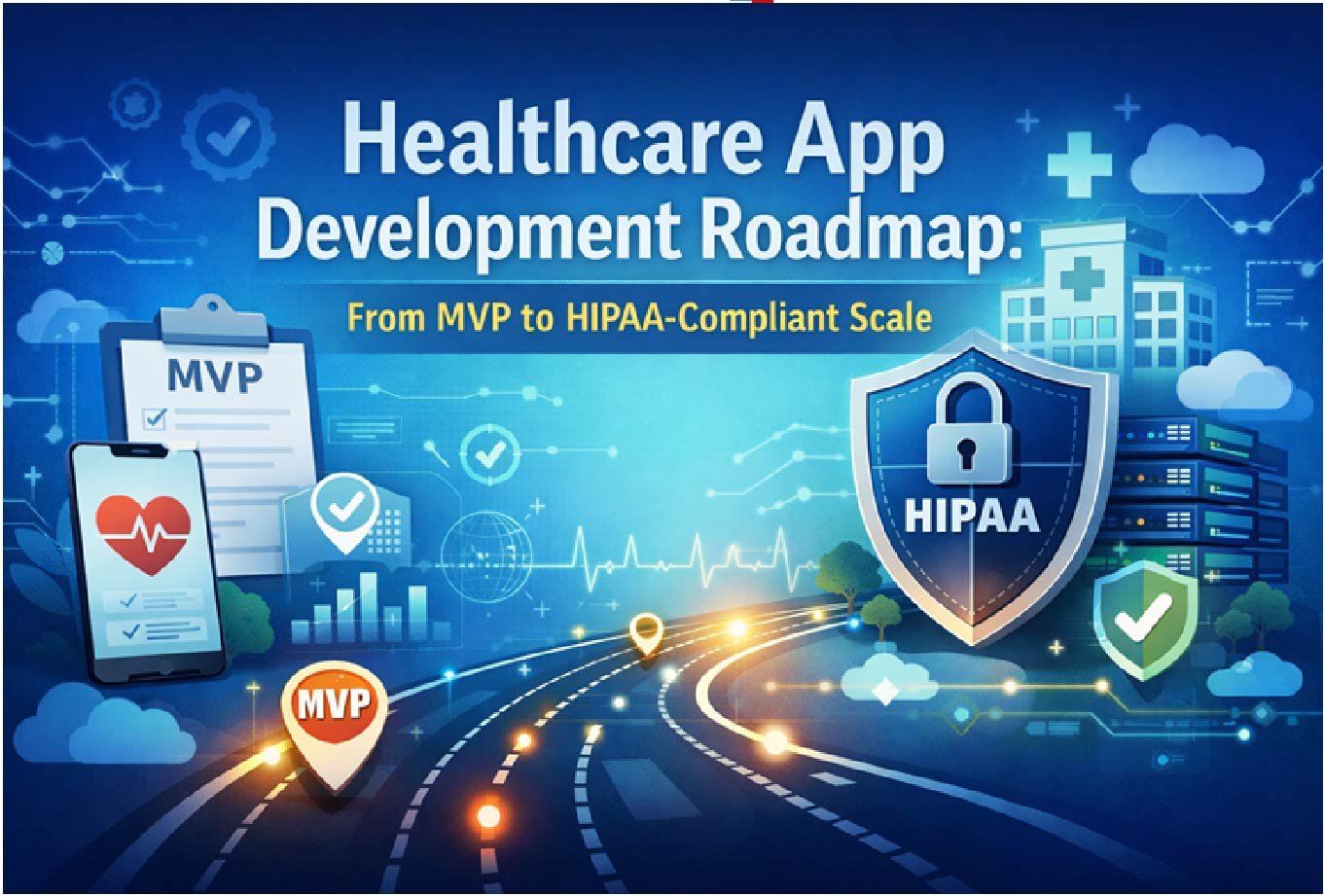
Healthcare App Development Roadmap: From MVP to HIPAA-Compliant Scale

The need for digital health products has been growing exponentially, but creating the right product is more than coding. Healthcare app development is a strategic process that includes proving your idea using a slim MVP and scaling to a fully safe, compliant,liant and interoperable system.
for founders, CTOs and other healthcare decision makers.akers The real issue isn’t in launching an application — but building one that can withstand scrutiny from regulators andprotects the privacy of patients, and grow sustainably.
This plan outlines the steps to go from MVP to HIPAA compliant scaleand without the expense of overhauls.
Phase 1: Define the Clinical & Business Problem
When development begins,egins it is crucial to be clear.
Ask:
- What workflows in healthcare does your workflow opt forimized?
- Who are your main customers: patients, providers,iders, and insurance companies?
- Does this sound like a telemedicine application or RPM application, an EHR integration, or a wellness product?
- Which regulatory category is your product a part of?
For healthcare apps, problem validation reduces security and compliance .ter..
Now, you must concentrate on:
- Market confirmation
- Analysis of competition
- Assessment of regulatory requirements (HIPAA, GDPR Local law)
- Monetization model (subscription, SaaS, B2B licensing)
A reputable healthcare software development company will carry out the technical feasibility as well as risk assessment before the creation of a single line of code.
Phase 2: Build a Lean but Structured MVP
A healthcare MVP is different from an MVP in other fields.
There is no way to avoid:
- Data encryption
- Secure authentication
- Essential HIPAA protections
- Audit Logs
Your Minimum Viable Product must comprise:
- Processes for the core patient or provider
- Secure login (OAuth 2.0 / MFA)
- Secure data storage (AES-256)
- Access control based on Secure cloud hosting (AWS/Azure HIPAA-compliant infrastructure)
The aim is to confirm acceptance, and not implement each feature.
Important Tip: Create your MVP with scale from day one. Insufficient backend infrastructure is the most common reason why health startups fail due to growth.
Focus areas for semantics in MVP:
- Telemedicine app development
- Patient engagement platform
- Electronic Health Record (EHR) Integration
- Healthcare data security
- Digital Health MVP
Phase 3: Design for Interoperability (FHIR & HL7)
Healthcare systems arindependentently.
If your solution isn’t compatwith into hospital labs, hosp,s and pharm,acies or insurance companies, expansion becomes unattainable.
App development for modern healthcare will require:
- Standards for Health Level Seven in the world of international Standards
- Fast Healthcare Interoperability Resources (FHIR)
- Protocols for messaging in HL7
- API-first architecture
Interoperability is a guarantee of:
- Integrating EHR/EMR seamlessly
- Real-time patient data exchange
- Future-proofed scalability
In the absence of this, it can lead to costly redevelopment in the future.
Phase 4: Implement HIPAA-Compliant Architecture
Scaling demands confidence. In healthcare,hcare it is about conformity.
If your system manages Protected Health Information (PHI), HIPAA compliance is non-negotiable.
The HIPAA-compliant health app must comprise:
- End-to-end encryption (data at rest and moving)
- BAAs, or Business Associate Affirmations (BAA) with suppliers
- Secure DevOps (DevSecOps) techniques
- Intrusion detection & monitoring
- Audit trails and logs
- Regularly conducted an assessment of vulnerability
Beyond HIPAA Consider:
- GDPR (if you are operating within the EU)
- SOC 2 certification
- ISO 27001 compliance
Selecting an experienced medical software development firm reduces the risk of regulatory compliance and accelerates preparation for certification.
Phase 5: Strengthen Infrastructure for Scale
When the product market fit has been established, then scaling can begin.
The stage at this point is where the development of healthcare apps shifts attentoon on:
- Microservices architecture
- Containerization (Docker/Kubernetes)
- Balance of load
- Cloud infrastructure auto-scaling
- Disaster recovery and backup systems for disaster recovery and backup
- Optimization of performance
Make sure you:
- 9 100% uptime
- High-availability
- Low-latency data access
- Scalable database architecture
Patients in the healthcare sector — and especially those who provide care will not accept downtime.
Phase 6: Prioritize Advanced Security & Risk Management
Health data is among the areas areat is most targeted for cyber-attacks.
To scale securely, implement:
- Zero-trust architecture
- Advanced Access Control Policies
- Multi-factor authentication (MFA)
- Security monitoring in real time
- Testing for periodic penetration
- Secure API gateways
The security of healthcare apps isn’t a function but rather the operational basis.
Phase 7: Post-Launch Optimization & Compliance Audits
The launch is just the beginning.
To continue to be successful, you must:
- Constantly reviewing compliance
- Updates to features based on data
- Monitoring of performance
- UX improvement in patient engagement
- Tracking of regulatory updates
Healthcare laws change. Your product should evolve to meet these changes.
The post-launch service should contain:
- Support team dedicated to your needs
- Maintenance backed by SLA
- Cloud cost optimization
- Planning a feature roadmap
Common Mistakes Founders Must Avoid
- The idea of compliance beinextra thoughtought
- Selecting generic developers with no prior experience in healthcare
- Doing nothing to meet interoperability specifications
- Overbuilding features before validating demand
- Underestimating post-launch support
Healthcare isn’t a normal SaaS market. It requires regulatory knowledge and technology execution.
What are the benefits of partnewithng in the Right Healthcare Software Development Company is important
From MVP to large-scale development of healthcare apps requires:
- Regulation understanding
- Secure cloud expertise
- Experience with interoperability
- Knowledge of Healthcare UX
- Support capabilities for long-term duration
A good partner does not act only as a supplier and a technology advisor that can help to navigate the complexities of compliance, sc,alininvestor-readiness-ready.
If you are looking for a software development company, look at:
- A proven healthcare portfolio
- Experimentation with EHR and FHIR Integrative HIPAA-compliant DevOps methods
- Transparent communications
- Post-launch scaling assistance
Final Thoughts: Build for Compliance, Scale for Impact
The future of healthcare innovation doesn’t revolve around speedy lau;ches, it’s about doing so responsibly.
A structured healthcare app development roadmap ensures:
- Risk reduction for regulatory compliance
- Strong data security
- System integration seamless
- Sustainable scalability
- Greater confidence of investors
If you’re looking to create or scale your medical device, begin with the design of compliance, interoperability, and architecture,cture and not only attributes.
In the realm of digital health,ealth your competitive advantage lies in performance but speed.
It’s secure as w,ell as compliant and flexible in execution.

Aguaris: The Powerful Eco-Friendly Water Treatment Solution for Hard Water Problems

Uncuymaza Meaning Explained: The Powerful Philosophy of Balance and Sustainability

Umrah Packages 2026 from Birmingham: Why Easter Is the Best Time to Travel

Buy Yahoo Accounts

Are We Running Out of Light? The Physics of the Approaching “Capacity Crunch” in Fiber Optics

Ottans: The Powerful Sustainable Design Revolution Transforming Interiors

The Future of Digital Content Creation: Exploring Nano Banana 2

Enterprise Large File Transfer Solutions: Solving Big Data Movement Challenges

Why Sustainable Growth Depends on Strong Financial Systems

Why Bluetooth Speakers Are the Perfect Companion for Every Occasion

TabooTube Explained: The Powerful Platform for Unfiltered Content

content://cz.mobilesoft.appblock.fileprovider/cache/blank.html: Explained with Powerful Insights

Scrolller Explained: The Powerful Way to Browse Reddit Images

Zavalio com Explained: The Ultimate Truth You Must Know

adswynk com: Monetize Links With Smart Ads in 2025

Deshoptec com Review: Powerful Truth About This Online Store

SSIS 469: Fixing SQL Data Errors in ETL Workflows

Milohacherry Coin Explained: The Powerful Lifestyle Crypto Rewarding Travel & Fitness

Novafork: The Best Free Streaming Site for Movies, Shows & Anime

Brandi Loge: The Inspiring Rise of a Bold Creative Leader
-
 Blog2 months ago
TabooTube Explained: The Powerful Platform for Unfiltered Content
-
 Blogs5 months ago
content://cz.mobilesoft.appblock.fileprovider/cache/blank.html: Explained with Powerful Insights
-
 Blog2 months ago
Scrolller Explained: The Powerful Way to Browse Reddit Images
-
 Blog2 months ago
Zavalio com Explained: The Ultimate Truth You Must Know