
Lifestyle
How Low Humidity Affects Your Sleep Quality?

You know the feeling. You crawl into bed on a cold night, burrow under the blankets, and expect to drift off into peaceful, uninterrupted sleep. Instead, you wake up at 3:00 AM with a throat so dry it hurts to swallow. Your nose feels stuffy. Your lips are cracked. And somehow, despite being exhausted, you can’t seem to fall back asleep.
If this sounds familiar, you’ve probably blamed everything from allergies to that spicy dinner you ate. But here’s what you might not realize: the culprit isn’t your body. It’s your bedroom air.
Many people battle low humidity every winter without understanding why their sleep quality plummets from November through March. The good news? Once you understand the science and invest in the right humidity measuring device, you can fix it. Here’s everything you need to know about creating the perfect sleep environment when the temperatures drop.
Why Does Winter Air Get So Dry in My House?
Cold outdoor air naturally holds less moisture. When that air enters your home and gets heated, its relative humidity drops even further. Most American homes use central heating systems that continuously circulate warm air, which accelerates moisture loss indoors.
It’s common for winter indoor humidity to fall between 20% and 30%, while sleep experts generally recommend a range of about 40% to 60% for comfort and respiratory health.
Without proper monitoring, many homeowners don’t even realize how dry their bedroom air has become.
How Does Low Humidity Disrupt Your Sleep?
Low humidity doesn’t just cause minor discomfort, but it can interfere with multiple biological systems that influence sleep quality.
Dry Nasal Passages and Congestion
When the air is too dry, moisture evaporates from your nasal passages and throat. This can cause inflammation, irritation, and even mild swelling. You might wake up feeling congested, even if you’re not sick.
Dry air can also thicken mucus, making it harder for your body to clear allergens and irritants. This often leads to nighttime coughing or postnasal drip, which interrupts deep sleep cycles.
If you snore, low humidity can make it worse. Irritated airways are more likely to vibrate and partially collapse, increasing breathing disturbances.
Sore Throat and Dry Mouth
Many people wake up in winter with a sore throat or dry mouth, assuming it’s dehydration. In many cases, the culprit is low humidity.
When moisture levels are too low, saliva evaporates more quickly. If you sleep with your mouth open, even slightly, you’re more likely to wake up feeling parched.
This dryness can also increase the risk of minor infections because your throat’s protective lining becomes less effective.
Skin Irritation and Itching
Low humidity pulls moisture from your skin overnight. You may wake up with dry, tight, or itchy skin. For people with eczema or sensitive skin, winter dryness can trigger flare-ups.
When your skin feels uncomfortable, your body remains in a mild stress state. That subtle irritation can reduce time spent in deep, restorative sleep.
Increased Static and Micro-Arousals
Ever notice more static electricity in winter? That’s a sign humidity is too low. While static shocks may seem harmless, very dry air can also create a subtle sense of discomfort that leads to micro-awakenings throughout the night.
You may not remember waking up, but fragmented sleep can leave you feeling tired in the morning.
Higher Susceptibility to Illness
Dry air may weaken your respiratory defenses. Studies suggest that viruses spread more easily in low-humidity environments. When nasal passages are dry, they are less effective at trapping pathogens.
If you’re getting sick more often during winter, extremely dry bedroom air may be part of the problem.
What Is the Ideal Bedroom Humidity for Sleep?
For most households, a bedroom humidity range between 40% and 50% provides the best balance. This level helps:
l Keep nasal passages moist
l Reduce snoring triggers
l Protect skin hydration
l Improve overall comfort
Humidity above 60% can encourage mold growth, especially in older homes or poorly ventilated areas. That’s why monitoring, not guessing, is essential.
How to Increase Bedroom Humidity Safely
Improving bedroom air quality doesn’t require major renovations. Small, consistent adjustments can make a significant difference.
Using a Humidifier Correctly
A humidifier is one of the most effective ways to raise humidity in winter. However, many people either overuse or underuse their devices.
Running a humidifier without monitoring humidity can lead to condensation on windows or even mold growth. The goal isn’t to create damp air, but it’s to maintain balance. Place the humidifier a few feet from your bed and allow airflow to circulate evenly. Clean the unit regularly to prevent bacteria buildup.
Adjusting Your Heating Strategy
If possible, lowering the thermostat slightly at night can help reduce excessive dryness. Extremely hot air holds more moisture capacity and can reduce relative humidity levels.
Using a programmable thermostat to maintain moderate nighttime temperatures can support both humidity balance and better sleep quality.
Adding Natural Moisture Sources
In dry climates, simple additions can help. Indoor plants release small amounts of moisture through transpiration. Placing a bowl of water near a heat source can also contribute minor humidity increases.
While these methods won’t replace a humidifier, they can supplement overall moisture levels.
Sealing Air Leaks
Drafty windows and poor insulation allow dry outdoor air to enter your home. Sealing leaks with weather stripping can help maintain more stable indoor humidity levels.
Why Monitoring Humidity Is Essential
Many people assume their air is dry, but assumptions can be misleading. Indoor humidity can fluctuate dramatically overnight depending on outdoor temperatures and heating cycles.
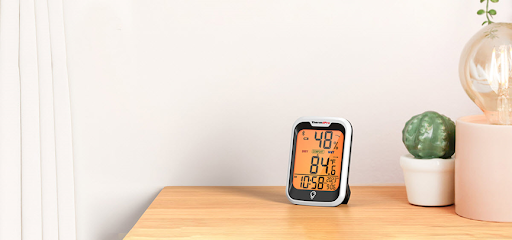
This is where a reliable monitoring device becomes invaluable. The ThermoPro TP358 Bluetooth Indoor Thermometer Hygrometer allows you to track both temperature and humidity levels directly from your smartphone. Instead of guessing whether your bedroom air is too dry, you can see real-time data and make informed adjustments.
It connects via Bluetooth, you can check readings without leaving your bed. If humidity drops too low during the night, you’ll know whether your humidifier needs adjustment.

Key Features of the ThermoPro TP358
The ThermoPro TP358 is designed for homeowners who want accurate, convenient environmental monitoring.
It measures both indoor temperature and humidity with precision, helping you maintain the ideal 40-50% sleep range. The large display makes it easy to see readings at a glance, while the 260ft Bluetooth connectivity allows you to monitor conditions remotely using your smartphone.
The device also stores historical data, so you can see humidity trends over time. This is particularly useful in winter when outdoor weather changes quickly. If you notice that humidity consistently drops below 30% at night, you can adjust your humidifier settings accordingly.
For parents monitoring a nursery, or for individuals sensitive to dry air, this level of visibility makes maintaining comfort much easier.
Creating the Perfect Sleep Environment
Improving sleep isn’t just about humidity alone. Temperature and humidity work together.
Most sleep experts recommend a bedroom temperature between 60°F and 67°F. When paired with humidity around 45%, this range creates an environment that supports deep, uninterrupted rest.
Using a monitoring device like the ThermoPro TP358 helps you maintain that balance consistently rather than reacting after discomfort appears.
The Long-Term Benefits of Balanced Humidity
Maintaining proper bedroom humidity doesn’t just improve sleep. It can also:
l Reduce respiratory irritation
Protect wood furniture and flooring
Support healthier skin
Improve overall indoor comfort
For people living in colder regions, investing in proper humidity control during winter can dramatically improve quality of life.
Final Thoughts
Low humidity is one of the most overlooked factors affecting your sleep. During winter months, heating systems can quietly reduce indoor moisture to levels that disrupt breathing, irritate skin, and fragment sleep cycles.
Fortunately, the solution isn’t complicated. By understanding the ideal humidity range, using a humidifier responsibly, and monitoring conditions with a reliable device like the ThermoPro TP358 Bluetooth Indoor Thermometer Hygrometer, you can create a bedroom environment that supports deeper, more restorative rest.
Better sleep starts with better air. When you control your bedroom’s temperature and humidity, you’re not just improving comfort, but you’re investing in your health, energy, and overall well-being throughout the winter season.

How to Fix “Error Connecting to Server” on WebRTC Video Chats

Scaling Modern Applications: A Guide to Microservices and AWS Expertise

Evaluating a Fast Turn PCB Partner for High-Frequency Applications

Why Roaming Can Be a Problem Abroad and How an eSIM Can Help

Do You Really Need a Watch Winder for Your Automatic Watch?

Why Sportswear Is No Longer Limited to Athletes

The Name Necklace Trend Is Back, But More Grown-Up

A Clearer Route to Reliable professional drain clearance and CCTV inspection

Is The High Street Bank Losing Its Grip On UK Business Loans?

TabooTube Explained: The Powerful Platform for Unfiltered Content

SSIS 469: Fixing SQL Data Errors in ETL Workflows

content://cz.mobilesoft.appblock.fileprovider/cache/blank.html: Explained with Powerful Insights

Scrolller Explained: The Powerful Way to Browse Reddit Images

Zavalio com Explained: The Ultimate Truth You Must Know

adswynk com: Monetize Links With Smart Ads in 2025

Deshoptec com Review: Powerful Truth About This Online Store

kz43x9nnjm65: The Smart Code Transforming Digital Technology

Novafork: The Best Free Streaming Site for Movies, Shows & Anime

Milohacherry Coin Explained: The Powerful Lifestyle Crypto Rewarding Travel & Fitness
-
 Blog10 months ago
TabooTube Explained: The Powerful Platform for Unfiltered Content
-
 Blog12 months ago
SSIS 469: Fixing SQL Data Errors in ETL Workflows
-
 Blogs1 year ago
content://cz.mobilesoft.appblock.fileprovider/cache/blank.html: Explained with Powerful Insights
-
 Blog10 months ago
Scrolller Explained: The Powerful Way to Browse Reddit Images