
Business
Laser How to Get Rust Off of Brick: The Ultimate Masonry Restoration Guide

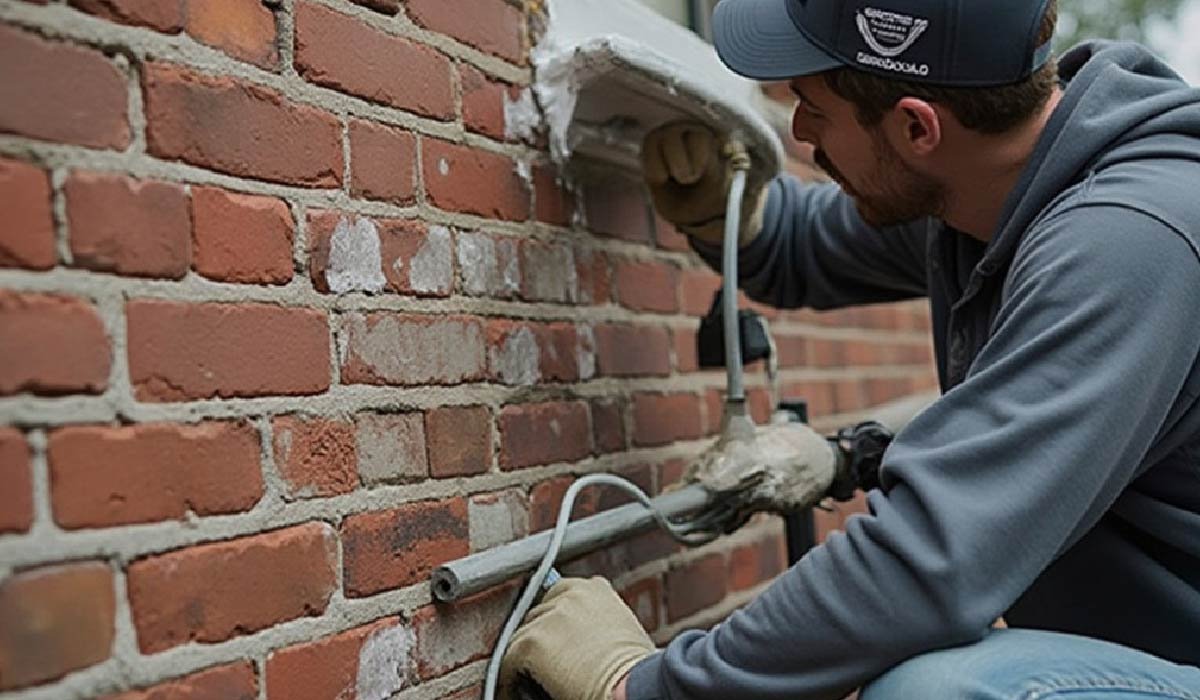
Laser how to get rust off of brick is the question many facility managers and restoration experts are asking as they move away from messy, abrasive traditional methods. For decades, cleaning rust from masonry meant choosing between “chemical cocktails” that risk environmental runoff or sandblasting that permanently scars the brick’s surface.
Today, laser cleaning machines offer a precision alternative. By using high-energy light to vaporize iron oxide (rust) without touching the brick itself, laser ablation preserves the structural integrity and “fire-skin” of the masonry. This guide explores how laser technology works, how it compares to traditional methods, and how to select the right equipment for your project.
The Science of Laser Ablation: How It Works
Laser rust removal relies on the principle of selective ablation. Unlike pressure washing or sandblasting, which use mechanical force, a fiber laser uses light energy at a specific wavelength (typically 1064nm) to clean the surface.
1. The 1064nm Wavelength
Fiber lasers are the industry standard for masonry because iron oxide (rust) is highly absorptive at the 1064nm wavelength. The rust absorbs the energy rapidly, while the underlying brick—a ceramic substrate—reflects the energy, remaining cool and unharmed.
2. Vaporization vs. Scouring
When the laser hits the rust, the temperature of the contaminant spikes instantly, causing it to “flash off” or vaporize. This process, known as sublimation, turns the solid rust into a fine dust or gas that is immediately captured by a fume extractor.
3. Cleaning Without Water
Because this is a dry process, there is no risk of efflorescence (the white salty crust often caused by water-based cleaning) or moisture-driven “freeze-thaw” damage in colder climates.
Laser vs. Traditional Methods
| Feature | Laser Cleaning | Chemical (Oxalic Acid) | Sandblasting |
| Contact Type | Non-contact | Saturated/Soaking | High-impact Abrasive |
| Secondary Waste | Minimal (Dust only) | Toxic Chemical Runoff | Heavy Media & Debris |
| Substrate Risk | Zero Damage | Risk of Acid Burns | Erosion of Brick Face |
| Speed | Extremely Fast | Slow Dwell Times | Moderate |
| Precision | High (Targeted) | Low (Bleeds into joints) | Low (Over-spray) |
When evaluating the Total Cost of Ownership (TCO), laser cleaning often outperforms traditional methods by eliminating the need for expensive consumables and hazardous waste disposal
Choosing the Right Laser Cleaning Machine
Not all lasers are created equal. For brick restoration, the choice between Pulsed and Continuous Wave (CW) lasers is critical. For delicate masonry, pulsed lasers are preferred because they deliver high peak power in short bursts, preventing heat buildup.
Common Power Outputs and Pricing
The following table reflects current 2026 market estimates for pulsed laser systems used in professional restoration.
| Power Output | Estimated Price Range (USD) | Common Laser Sources |
| 100W Pulsed | $2,000 – $2,400 | JPT, Raycus, IPG (Lite) |
| 300W Pulsed | $3,800 – $5,500 | JPT, Maxphotonics |
| 500W Pulsed | $4,500 – $11,000 | IPG, JPT (High Pro) |
Pro Tip: For historical restoration where the brick is soft or porous, a 100W–200W Pulsed laser is the safest option. For large-scale industrial facades with heavy rust, a 1000W+ Continuous laser may be used, provided the operator manages the heat-affected zone (HAZ) carefully.
Step-by-Step: Getting Rust Off Brick with a Laser
Operating a handheld laser rust remover requires specific settings to ensure efficiency without damaging the mortar.
- Calibration: Set your scan width (usually 10–100mm) and start at a low power setting (15-30%). Increase power gradually until the rust begins to vaporize cleanly.
- Standoff Distance: Maintain a consistent “hand’s width” (approx. 100mm–150mm) distance from the brick. Most modern heads use a focal lens that dictates the optimal distance.
- The Pass Technique: Use a steady, sweeping motion. Overlap your passes by roughly 30% to ensure no “zebra striping” occurs on the surface.
- Fume Extraction: Always position a high-volume fume extractor near the work area to capture vaporized iron particulates and ozone.
Safety: The Non-Negotiables (E-E-A-T)
Laser cleaning machines are Class IV laser products. If used improperly, they can cause permanent eye damage or skin burns.
- Wavelength-Specific Goggles: Standard sunglasses or welding hoods are insufficient. You must use OD6+ (Optical Density) goggles rated for the 1064nm wavelength.
- The Optical Hazard Zone (OHZ): Establish a controlled area with laser-safe barriers to protect bystanders from reflected beams.
- PPE: Wear a respirator (N95 or better) to avoid inhaling the fine metallic dust produced during ablation.
- Compliance: Ensure your equipment meets ISO 11553 safety standards for laser processing machines.
Conclusion
Laser rust removal is the premier choice for historical preservation, high-end residential work, and projects with strict environmental regulations. While the initial equipment cost is higher than a pressure washer, the lack of consumables, reduced labor time, and superior results provide a rapid ROI.

Do You Really Need a Watch Winder for Your Automatic Watch?

Why Sportswear Is No Longer Limited to Athletes

The Name Necklace Trend Is Back, But More Grown-Up

A Clearer Route to Reliable professional drain clearance and CCTV inspection

Is The High Street Bank Losing Its Grip On UK Business Loans?

How Engineering Firms Are Using Technology to Deliver Faster Projects

Why Elasticated Waists Have Stopped Being the Thing Nobody Admits They Own

Magnific for Enterprise: How Global Brands Are Using AI Creative Production at Scale

Micro-Soldering Tools and iPhone Motherboard Repair: A Complete Guide

UK Management College Celebrates 10 Years of Excellence with Landmark SummerFest 2026 at Heaton Park

TabooTube Explained: The Powerful Platform for Unfiltered Content

SSIS 469: Fixing SQL Data Errors in ETL Workflows

content://cz.mobilesoft.appblock.fileprovider/cache/blank.html: Explained with Powerful Insights

Scrolller Explained: The Powerful Way to Browse Reddit Images

Zavalio com Explained: The Ultimate Truth You Must Know

adswynk com: Monetize Links With Smart Ads in 2025

Deshoptec com Review: Powerful Truth About This Online Store

kz43x9nnjm65: The Smart Code Transforming Digital Technology

Novafork: The Best Free Streaming Site for Movies, Shows & Anime

Milohacherry Coin Explained: The Powerful Lifestyle Crypto Rewarding Travel & Fitness
-
 Blog9 months ago
TabooTube Explained: The Powerful Platform for Unfiltered Content
-
 Blog11 months ago
SSIS 469: Fixing SQL Data Errors in ETL Workflows
-
 Blogs12 months ago
content://cz.mobilesoft.appblock.fileprovider/cache/blank.html: Explained with Powerful Insights
-
 Blog9 months ago
Scrolller Explained: The Powerful Way to Browse Reddit Images