
Blog
How to Respond to Irate Customers

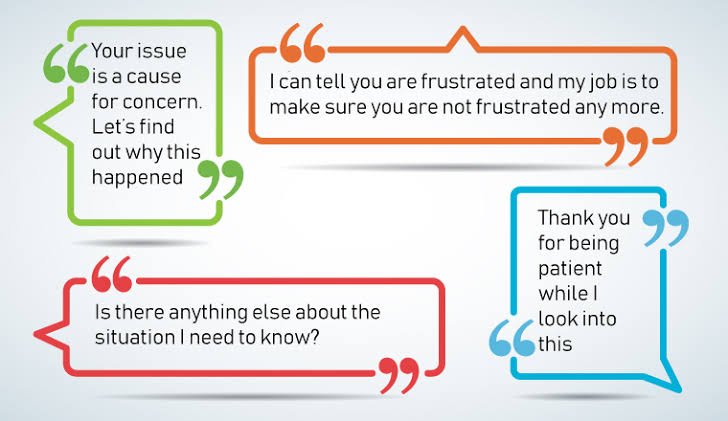
Every IT service team will, at some point, face a customer who is genuinely furious – not mildly annoyed, but furious in the way that comes from repeated failures, missed deadlines, or a system outage at the worst possible moment. Knowing how to respond to irate customers is not a soft skill reserved for front-line hospitality workers. For technical support teams, it is a core operational competency that directly affects client retention, SLA compliance, and long-term trust.
The difference between a customer who churns and a customer who stays often comes down not to whether a problem occurred, but to how the team responded when it did. Anger, when handled well, can actually solidify a relationship. Handled poorly, even a minor issue becomes grounds for cancellation.
This guide breaks down the mechanics of dealing with angry customers – what to say, when to escalate, how to structure the workflow, and how service management infrastructure supports consistent recovery.
Why Customers Become Irate: Understanding the Underlying Driver
Before drafting a response, it helps to understand what the customer’s anger is actually signaling. In most IT service contexts, irate behavior traces back to a handful of root causes: unmet expectations, a perceived lack of urgency, feeling ignored, or a loss of control over a situation that matters to their business.
These aren’t abstract emotional states – they map to specific failure modes. A client escalating over a billing dispute is often reacting to process opacity: they didn’t understand what they were being charged for, and no one explained it proactively. A client screaming about a repeated ticket is reacting to structural failure: the issue was closed without verification, and they had to reach out again. Categorizing the type of anger before responding is the first step toward a productive interaction.
Context also matters here. A government agency IT manager managing 400 devices and a team of four technicians operates under constant audit pressure and genuinely cannot afford prolonged outages. When they call in angry, the stakes are usually institutional, not personal. That distinction should shape the tone and priority of the response.
The Response Framework: What to Do in the First Three Minutes
Speed and structure define the first phase of handling an upset customer. The initial response window – typically the first three minutes of a call or the first reply to a message – sets the emotional tone for the entire interaction. Getting it wrong here compounds the frustration regardless of how technically sound the eventual resolution is.
Step One: Acknowledge Before Explaining
The instinct of most technical responders is to immediately explain what happened and why. This is a mistake. An irate customer does not yet want your technical analysis. They want to know that someone understands the impact their problem is causing.
Start with a direct acknowledgment: “I can see this has been going on longer than it should, and I understand why you’re frustrated.” This isn’t capitulation or admission of fault – it’s recognizing the experience from the customer’s point of view before moving to resolution. Research in customer service recovery consistently shows that acknowledged customers de-escalate faster than those who receive immediate explanations.
Step Two: Establish Control Without Taking Over
Once the acknowledgment lands, the responder needs to reassert a sense of structure – without the customer feeling steamrolled. This means communicating what will happen next, who owns the case, and when the next update will arrive.
Specific commitments outperform vague reassurances. “I’ll have an update for you by 2 PM today” is more effective than “We’ll look into it.” Vague language increases anxiety in already stressed customers. Specificity signals competence and organizational control.
Step Three: Validate, Then Document
Before ending the opening phase, explicitly validate the customer’s concern in their own terms. If they’re upset because a ticket was closed without resolution, say: “You’re right that this should not have been marked resolved. We’re reopening it now.” Then document exactly what was said and what was committed to – this is not just good practice, it’s essential for escalation continuity.
Reference Table: Response Framework by Complaint Type
| Complaint Type | Emotional State | Primary Technique | Target Resolution Time |
| Service outage | Panic / Urgency | Acknowledge + status update | < 15 min to first reply |
| Billing dispute | Frustration | Validate concern + escalate | < 4 hours to resolution |
| Missed SLA | Anger | Own the failure + corrective plan | Same business day |
| Feature request denied | Disappointment | Empathy + roadmap context | < 48 hours follow-up |
| Repeated issue | Distrust | Root cause disclosure | Dedicated case owner assigned |
Managing Tone When the Customer Won’t De-escalate
Some customers won’t respond to calm acknowledgment. They’re past that point – the frustration has been building for weeks, and this call is the breaking point. In these situations, the responder’s goal shifts from de-escalation to containment: keeping the conversation productive enough to gather what’s needed and commit to a path forward.
The most useful technique here is the patient redirect. When a customer begins repeating themselves or escalating rhetoric, a phrase like “I hear you, and I want to make sure I understand this completely – can you walk me through the sequence one more time?” serves two purposes. It shows continued engagement, and it gives the customer a constructive channel for the energy they’re bringing to the call.
What rarely works: interrupting to correct facts, citing policy at the wrong moment, or putting someone on hold without explanation. Each of these behaviors reinforces the customer’s sense that they’re dealing with a system, not a person. Even technically correct responses delivered in an emotionally dismissive way tend to make things worse.
The tone goal is neutral authority – not subservient, not defensive. The responder should sound like someone who is fully in control of the process and genuinely focused on resolution, not someone who is apologizing reflexively or waiting for the call to end.
Escalation: When and How to Move a Complaint Up the Chain
Not every irate customer interaction can or should be handled at the first-response level. There are specific signals that indicate immediate escalation is required, and having a clear internal protocol for those signals is what separates teams that recover well from those that lose accounts unnecessarily.
The clearest escalation triggers are: any mention of legal action, a second complaint on the same unresolved issue, a breach of a contractually defined SLA, or an executive-level contact from the client’s side. These situations require a named case owner with more authority than the initial responder, and they require that person to reach out proactively – not wait for the customer to call again.
Escalation Path and Ownership Matrix
| Severity | First Responder | Escalation Trigger | Owner at Escalation | Documentation Required |
| Low | Tier 1 agent | No reply from client > 24h | Same agent | Ticket note |
| Medium | Tier 1 agent | Second complaint on same issue | Team lead | Incident summary |
| High | Team lead | SLA breach or legal mention | IT manager / director | Full incident report |
| Critical | IT manager | Immediate on first contact | C-level + account owner | Executive briefing doc |
The documentation requirement column in that table is not bureaucratic overhead – it’s protection. When an escalated customer eventually reaches an IT director or C-level contact, that person needs to walk into the conversation fully briefed, or they’ll inadvertently confirm the customer’s worst fear: that no one at this company knows what’s happening with their account.
How Service Management Infrastructure Supports Customer Recovery
Individual technique only goes so far. The ability to respond to angry customers consistently across a team – especially one managing hundreds of endpoints and dozens of simultaneous tickets – depends on having the right service management infrastructure in place. Teams that track asset relationships, ticket history, and SLA status in a unified platform recover faster because responders can access the full context of a customer relationship in seconds, rather than piecing it together across email threads and spreadsheets. Alloy Software provides exactly this kind of integrated environment, combining ticketing, asset management, and change workflows in one configurable platform – making it practical for small and mid-market IT teams to maintain the responsiveness that larger enterprises spend millions to achieve.
The practical difference shows up most clearly in the moment of a high-stakes call. A technician who can immediately pull up the asset history tied to a customer’s complaint, see every previous ticket, and check the current SLA status is in a fundamentally different position than one who has to ask the customer to repeat their history. The former conveys competence; the latter reinforces the complaint.
Ticket categorization is particularly underrated in this context. Teams that set up granular, consistent categories from the start of their service management deployment are able to analyze patterns across complaints – identifying which issues recur, which clients generate repeated escalations, and where process gaps are causing systemic failures. This analytical layer is what turns reactive firefighting into proactive relationship management.
Responding in Writing: Emails and Ticket Notes That Don’t Backfire
Written responses to irate customers carry additional risk because tone is harder to control and the message becomes a permanent record. A poorly worded email to an upset client can circulate internally at their organization, be referenced in escalations, or simply reinforce the sense that the vendor doesn’t take their concerns seriously.
What Works in Written De-escalation
Short paragraphs. A clear subject line that references the specific issue. An opening that acknowledges the problem without restating it at excessive length. A commitment with a specific date or time. A named contact the customer can reach directly. These structural elements communicate competence more than any particular phrasing.
Avoid passive voice wherever possible. “The ticket was closed in error” is weaker than “We closed that ticket incorrectly and that was our mistake.” The former sounds like deflection; the latter sounds like accountability. For customers who are already skeptical, the distinction matters.
What to Avoid
Templated language that sounds automated is particularly damaging to trust. If a customer just had a genuinely bad experience and receives a response that reads like a generic form letter, the message they receive is: your problem wasn’t important enough to warrant a real response. This is true even if the template technically says all the right things. Personalization – even small details like referencing the specific asset or ticket involved – signals that someone actually read the complaint.
Never close a written response with “Please don’t hesitate to reach out” as the primary resolution statement. It signals that the responder doesn’t expect the issue to be fully resolved. Better to end with a specific next step: what will happen, by when, and who the customer should contact if that doesn’t occur.
Turning Individual Incidents Into Systemic Improvement
The final, most overlooked dimension of handling angry customers is using those interactions as diagnostic data. Every irate contact is a signal about where service delivery has broken down – categorized correctly, these signals accumulate into actionable intelligence. Teams using structured service management tools can generate reports on complaint frequency by issue type, client segment, or technician, enabling leadership to intervene before individual frustrations become account losses. Understanding the connection between ITSM workflows and customer satisfaction outcomes helps IT managers build the case internally for the kind of platform investment that makes this analysis possible.
Post-incident reviews – even informal fifteen-minute retrospectives after a significant customer escalation – generate the kind of institutional knowledge that prevents recurrence. What was the root cause? Was it a process failure or a one-time technical anomaly? Was the SLA definition clear enough? Did the customer have realistic expectations going in? These questions are worth asking, because the cost of losing a client to frustration that could have been prevented is always higher than the cost of the process improvement that would have stopped it.
When Irate Customers Are a Symptom, Not the Problem
In some cases, a pattern of customer anger isn’t primarily a communication problem – it’s an infrastructure problem. When tickets are falling through the cracks because there’s no unified view of assets and service history, when SLAs are being breached because routing is manual and inconsistent, or when the same issues recur because there’s no systematic root cause tracking, the right response isn’t just better de-escalation training. It’s fixing the underlying operational gaps.
Mid-market IT teams – typically managing two to ten technicians, hundreds of endpoints, and complex multi-site environments – are particularly vulnerable to this pattern. The service volume is high enough that manual processes break down, but the budget and headcount don’t support enterprise-grade tooling. This is precisely where the gap between what’s promised to customers and what can actually be delivered tends to widen.
The teams that manage irate customers most effectively aren’t necessarily the ones with the most patient or skilled responders. They’re the ones whose systems give every responder instant access to complete, accurate context – so that every customer interaction, regardless of who picks up the ticket, starts from a position of informed competence rather than scrambled catch-up.
Conclusion: Competence Is the Best De-escalation Tool
Responding to irate customers well is partly technique and partly infrastructure. The technique – acknowledge first, establish control, document commitments, escalate with full context – can be learned and reinforced through training. The infrastructure – unified ticketing, asset relationships, SLA tracking, complaint categorization – has to be built deliberately, and it pays dividends every time a high-stakes customer interaction occurs.
Angry customers are not anomalies to be survived. Handled correctly, they’re opportunities to demonstrate exactly the kind of responsive, accountable service that builds the long-term relationships worth keeping. The organizations that understand this invest in both the people skills and the platform to back them up – and their client retention numbers reflect it.

How to Fix “Error Connecting to Server” on WebRTC Video Chats

Scaling Modern Applications: A Guide to Microservices and AWS Expertise

Evaluating a Fast Turn PCB Partner for High-Frequency Applications

Why Roaming Can Be a Problem Abroad and How an eSIM Can Help

Do You Really Need a Watch Winder for Your Automatic Watch?

Why Sportswear Is No Longer Limited to Athletes

The Name Necklace Trend Is Back, But More Grown-Up

A Clearer Route to Reliable professional drain clearance and CCTV inspection

Is The High Street Bank Losing Its Grip On UK Business Loans?

TabooTube Explained: The Powerful Platform for Unfiltered Content

SSIS 469: Fixing SQL Data Errors in ETL Workflows

content://cz.mobilesoft.appblock.fileprovider/cache/blank.html: Explained with Powerful Insights

Scrolller Explained: The Powerful Way to Browse Reddit Images

Zavalio com Explained: The Ultimate Truth You Must Know

adswynk com: Monetize Links With Smart Ads in 2025

Deshoptec com Review: Powerful Truth About This Online Store

kz43x9nnjm65: The Smart Code Transforming Digital Technology

Novafork: The Best Free Streaming Site for Movies, Shows & Anime

Milohacherry Coin Explained: The Powerful Lifestyle Crypto Rewarding Travel & Fitness
-
 Blog10 months ago
TabooTube Explained: The Powerful Platform for Unfiltered Content
-
 Blog12 months ago
SSIS 469: Fixing SQL Data Errors in ETL Workflows
-
 Blogs1 year ago
content://cz.mobilesoft.appblock.fileprovider/cache/blank.html: Explained with Powerful Insights
-
 Blog10 months ago
Scrolller Explained: The Powerful Way to Browse Reddit Images