
Tech
Why Bottle Washer Performance Depends on the Cleaner You Use

Many parents assume that if an automatic bottle washer runs through a full cycle, the bottles must come out perfectly clean. It’s an understandable belief—after all, the machine sprays water, uses heat, and often even dries and sterilizes. But in real life, bottle hygiene is not only about running a cycle. It’s about what the cycle is able to remove.
The truth is that bottle washer performance depends on more than the appliance itself. The detergent formula you choose plays a major role in whether bottles come out truly fresh, odor-free, and free from invisible buildup that can linger even after washing.
The Common Assumption: If the Machine Runs, the Bottles Are Clean
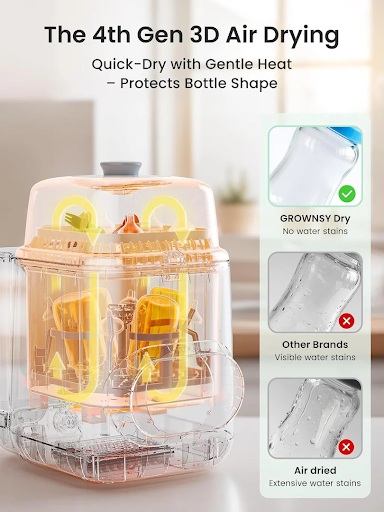
Modern baby bottle washers are designed to make feeding life easier. Many models, like the Grownsy Baby Bottle Washer, Sterilizer and Dryer, combine multiple functions in one unit—washing, sterilizing, drying, and even storing bottles in a clean environment. With powerful spray jets and high-temperature sterilization, they can feel like a complete solution for busy households.
However, even the most advanced washer is still dependent on the cleaning agent inside it. If the detergent isn’t effective at breaking down milk proteins and oily residue, the washer may leave behind buildup that’s hard to see but easy to smell over time.
The Real Problem: Milk Film, Residue, and Lingering Odor
Babies’ feeding gear doesn’t only show grime you can see. Hidden layers from milk often cling inside bottles, on teats, across pump pieces. Over time, these residues pile up without standing out at first glance. Since the gunk hides well, caregivers might miss it – until a whiff of old dairy hits their nose during cleanup. A hazy look on glassware post-wash sometimes gives it away instead.
Smell lingers? That’s usually what shows up first. Bottles might seem clean enough – yet somehow off – not quite right in the nose. Rinsing takes care of gunk on top, sure, yet leaves behind a stubborn layer beneath. Milk film sticks around even if things look fine. Hard water makes this worse. Daily washes add up too. Tiny bits stay put without anyone noticing until now.
Why Milk Film Is Harder to Remove Than You Think
Milk contains fats, proteins, and sugars, and each of these behaves differently during cleaning. Hot water alone may loosen residue, but without the right formula, it may not fully break down the oily layer that clings to feeding gear.
That’s why parents sometimes notice that bottles look clean but still feel slippery or slightly coated. It’s not always a machine issue—it’s often a formula issue.
Why the Cleaning Formula Matters as Much as the Appliance
A high-performing bottle washer depends on a detergent that is designed for baby feeding residue. The right formula should dissolve quickly, rinse cleanly, and break down stubborn buildup without leaving behind fragrance or chemical smells that don’t belong on baby items.
A good baby bottle cleaner needs to do more than remove visible residue—it also has to break down milk film without leaving behind a harsh smell. This matters because bottles, nipples, and pump parts are items babies use multiple times daily, and any leftover film can affect both freshness and long-term cleanliness.
For parents using an automatic washer, the cleaning formula also needs to be machine-friendly. Detergents that create too many suds or don’t rinse properly can interfere with spray performance and leave residue behind in the washer itself.
Enzyme-Based Cleaning Makes a Difference
Fresh enzyme blends inside today’s cleaning tabs go after protein stains like spilled milk with sharp precision. Because these biological helpers do heavy lifting, fewer rough synthetic ingredients are needed – so your clothes finish smelling neutral, not soaked in perfume.
Families rinsing bottles again and again through the day might find enzyme cleaners work well – stopping gunk before it piles up instead of waiting until crust forms.
Compatibility Matters More Than Parents Realize
One of the biggest mistakes parents make is assuming any soap or detergent will work in a bottle washer. In reality, some cleaning agents are designed for handwashing, while others are designed for dishwashers—and neither may be ideal for baby bottle washer machines.
Machine compatibility matters because washers have specific water pressure systems, spray jets, and internal parts that depend on controlled detergent breakdown. Using the wrong formula can reduce cleaning efficiency, leave residue in hard-to-reach areas, or create excess foam that disrupts the cycle.
For parents using automatic washers every day, grownsy detergent tablets offer a machine-friendly option designed for bottle and pump-part cleanup. These tablets are made to dissolve efficiently, support residue breakdown, and work across different washer brands, which makes daily cleaning routines more consistent and reliable.
Why “Compatible With All Brands” Is a Practical Advantage
One moment you’re at home, the next you’re moving between cities – routines shift. Machines differ from place to place. Trying a new cleaner each time takes effort. When one formula fits all, less sorting is needed. Fewer choices mean fewer delays. Simplicity shows up quietly. Results stay consistent without extra steps.
Oddly enough, poor detergent performance in certain washers often gets mistaken for machine trouble. Instead, gunk and smells might stem from using the wrong formula. A better match cuts down on residue nobody wants. That funky scent? Probably not the appliance’s fault after all.
A Practical Bottle-Care Routine for Better Washer Performance
To keep bottles consistently fresh, parents can build a simple routine that supports both the washer and the feeding gear. The goal isn’t to add more work—it’s to prevent buildup before it starts.
Daily Bottle-Care Habits That Help
A strong everyday routine often includes:
- Rinsing bottles quickly after feeds to prevent milk from drying
- Loading bottles and parts properly so spray jets can reach all angles
- Using a detergent made for baby feeding residue
- Running full wash cycles when possible instead of only quick rinses
- Allowing bottles to fully dry before storage
If you’re using a washer like the Grownsy Baby Bottle Washer, Sterilizer and Dryer, choosing the right detergent helps the machine deliver its full benefit—deep cleaning, hygienic sterilization, and dry, ready-to-use bottles without lingering odor.
Weekly Maintenance Keeps the Machine Efficient
In addition to daily cleaning, many parents find it helpful to do a quick weekly reset. This may include wiping down the interior, checking spray arms for blockage, and ensuring there is no detergent buildup inside the unit.
A little maintenance goes a long way in preserving performance, keeping bottles cleaner, and making sure the washer stays efficient through months of heavy use.
Final Thoughts: The Cleaner Is Part of the Machine’s Performance
Automatic bottle washers are a game-changer for busy families, but they can only perform as well as the cleaning formula used inside them. If bottles still smell slightly sour or feel cloudy after washing, it may not be a machine failure—it may simply be a sign that the detergent isn’t designed for milk film and feeding residue.
When parents pair a strong washer with a reliable, compatible cleaning tablet, bottle care becomes smoother, more hygienic, and far less stressful. Over time, the right detergent doesn’t just clean bottles—it protects the washer, supports freshness, and helps parents feel confident that feeding gear is truly ready for the next use.

How to Fix “Error Connecting to Server” on WebRTC Video Chats

Scaling Modern Applications: A Guide to Microservices and AWS Expertise

Evaluating a Fast Turn PCB Partner for High-Frequency Applications

Why Roaming Can Be a Problem Abroad and How an eSIM Can Help

Do You Really Need a Watch Winder for Your Automatic Watch?

Why Sportswear Is No Longer Limited to Athletes

The Name Necklace Trend Is Back, But More Grown-Up

A Clearer Route to Reliable professional drain clearance and CCTV inspection

Is The High Street Bank Losing Its Grip On UK Business Loans?

TabooTube Explained: The Powerful Platform for Unfiltered Content

SSIS 469: Fixing SQL Data Errors in ETL Workflows

content://cz.mobilesoft.appblock.fileprovider/cache/blank.html: Explained with Powerful Insights

Scrolller Explained: The Powerful Way to Browse Reddit Images

Zavalio com Explained: The Ultimate Truth You Must Know

adswynk com: Monetize Links With Smart Ads in 2025

Deshoptec com Review: Powerful Truth About This Online Store

kz43x9nnjm65: The Smart Code Transforming Digital Technology

Novafork: The Best Free Streaming Site for Movies, Shows & Anime

Milohacherry Coin Explained: The Powerful Lifestyle Crypto Rewarding Travel & Fitness
-
 Blog10 months ago
TabooTube Explained: The Powerful Platform for Unfiltered Content
-
 Blog12 months ago
SSIS 469: Fixing SQL Data Errors in ETL Workflows
-
 Blogs1 year ago
content://cz.mobilesoft.appblock.fileprovider/cache/blank.html: Explained with Powerful Insights
-
 Blog10 months ago
Scrolller Explained: The Powerful Way to Browse Reddit Images